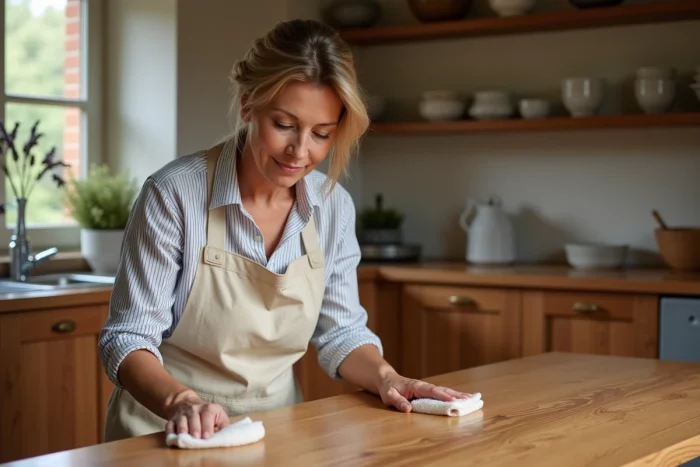
The maintenance of a house goes beyond just vacuuming or cleaning surfaces. It also includes the choice of products used, the management of indoor air quality, and the decorating decisions that transform a functional space into a pleasant place to live. Understanding the mechanisms behind each action allows for more effective action and helps preserve both the interior and health.
Indoor air quality: what your household products really release
The air in a home is often more polluted than outdoor air. The volatile organic compounds (VOCs) emitted by household products, scented candles, and air fresheners directly contribute to this contamination. The Anses reminds us in its updated 2023 report on indoor air quality that French homes are regularly exposed to a cocktail of pollutants from these domestic sources.
The agency recommends limiting indoor fragrances and aerosols, favoring products with a recognized eco-label, and ventilating daily, even in urban areas. Specifically, opening windows for ten minutes morning and evening while cleaning is enough to refresh the air in a standard-sized room.
Products sold under vague claims like “natural” or “environmentally friendly” pose a distinct problem. The European directive (EU) 2024/825, adopted in February 2024, now prohibits these environmental claims unless they are supported by verifiable evidence. To access wype.fr and explore suitable maintenance solutions, it is better to check for the presence of an official label (European Eco-label, for example) rather than relying on packaging marketing.
Natural and artificial light: transforming the ambiance of a room without renovations
Light changes the perception of a space more than any piece of furniture. A north-facing living room will always appear narrower than a south-facing one, even with the same area. Working on lighting is akin to influencing the perceived volume of each room.
Maximizing natural light
Light linen curtains are a better choice than thick drapes: they filter light without absorbing it. Mirrors positioned opposite a window reflect brightness towards the back of the room, a simple principle that is rarely applied correctly.
Light surfaces (white walls, light wood furniture) reflect light instead of absorbing it. In a kitchen or hallway without windows, a lacquered backsplash or glossy tiles partially compensates for the lack of openings.
Choosing suitable artificial lighting
Layering multiple light sources creates a more natural result than a single ceiling fixture. The rule is based on three levels:
- A general diffuse lighting (ceiling light or pendant) for the basic functionality of the room
- Accent lighting (adjustable spots, wall sconces) to highlight a wooden wall, a painting, or a shelf
- Ambient lighting (table lamps, string lights, LED candles) to modulate the atmosphere according to the time of day
Warm color temperature bulbs (around 2700 K) are suitable for the living room and bedroom. A cooler temperature works better in a workspace or bathroom.
Colors and materials: creating a cohesive decor room by room
Painting an accent wall in a living room is inexpensive and radically changes the style of an interior. The choice of color is based on a principle of controlled contrast: a strong shade (teal, sage green, terracotta) works well on a single wall when the rest of the room remains neutral.
Materials play as crucial a role as colors. Combining raw wood, black metal, and textiles adds visual depth that a monochromatic interior does not produce. Current design favors these texture mixes over uniformity.
A cushion, a throw, or a rug is enough to introduce a new seasonal palette without repainting. This modular approach allows for refreshing the decor of a space every few months on a limited budget. The living room and bedroom are the two rooms where these textile changes have the most visible effect.
Targeted surface maintenance: adapting the action to the material
Applying the same product on all surfaces damages some materials and leaves others dull. Each type of surface requires a specific approach.
- Solid wood (flooring, countertops) should be cleaned with a damp cloth and a neutral pH soap. Alkaline detergents or bleach discolor the wood fibers and weaken the finish
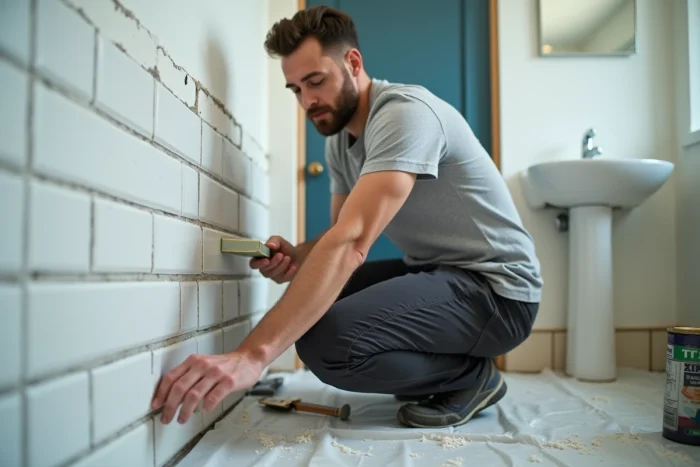
- Tiles can withstand most common cleaners, but porous grout absorbs acidic products (pure vinegar, concentrated lemon), which degrades it over time
- Laquered surfaces (kitchen, bathroom) can be scratched by abrasive sponges. A damp microfiber cloth removes most marks without damaging the coating
- Natural stone (marble, slate, travertine) reacts to acids with irreversible stains. A specific neutral pH cleaner remains the only safe option
Adapting the product to the material prevents cumulative damage that eventually leads to costly renovations. Identifying the surfaces in your home and creating a dedicated cleaning kit for each remains the most rational method.
Garden and exteriors: extending aesthetics beyond the walls
Outdoor maintenance directly influences the overall perception of a house. A neglected garden or terrace visually devalues the whole, even if the interior is impeccable.
Wooden garden furniture (teak, acacia) naturally grays under UV exposure. An annual treatment with a brightener followed by a protective oil is enough to maintain its original color. For composite decks, a simple wash with low-pressure water and black soap removes moss and dirt without damaging the boards.
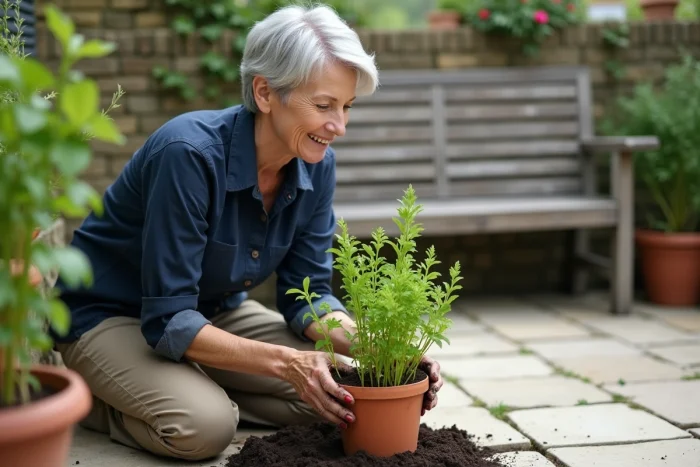
A few potted plants placed near the entrance or on a windowsill add a touch of greenery at a low cost. Ornamental grasses and herbs (rosemary, thyme, sage) require little watering and maintain an aesthetic appearance all year round, even without a garden.
The last point to monitor is outdoor lighting. A solar string light along a pergola or recessed lights in a terrace staircase transform the space at dusk, without heavy electrical intervention. The maintenance of a house rarely stops at the front door, and it is often outside that small regular actions create the most noticeable contrast between a well-kept place and one that is simply inhabited.