
Farming represents the most common form of indirect management in France. A landowner (lessor) makes their plots available, and an operator (tenant) cultivates them in exchange for a rent regulated by the farming status. In this scheme, the question of insurance arises on both sides of the lease, with distinct obligations and gray areas that the contract alone does not always resolve.
Insurance Obligations in a Rural Lease: What the Rural Code Really Requires
The farming status organizes the distribution of charges between the lessor and the tenant, but it remains surprisingly discreet on insurance. No provision in the Rural Code explicitly requires the tenant to take out insurance on buildings or crops. The obligation most often arises from a clause inserted in the lease.
The lessor, for their part, retains the responsibility to insure the buildings they make available against fire and rental risks. The tenant must, in turn, guarantee their liability for any damage they may cause to the rented property. This distribution resembles that of a classic residential lease, with one difference: the activity carried out on the land generates specific risks (agricultural machinery, storage of phytosanitary products, spreading) that go beyond the scope of simple rental liability.
To insure agricultural land under lease, it is therefore necessary to distinguish between what pertains to the land (owner’s responsibility) and what pertains to the operation (tenant’s responsibility). Confusing the two exposes one to gaps in coverage in the event of a claim.
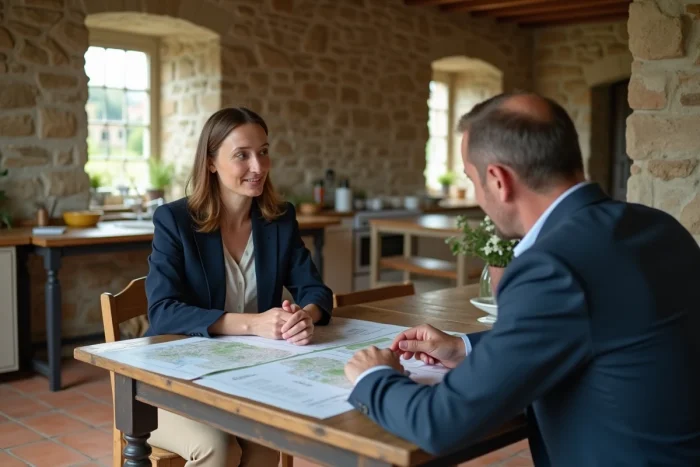
Tenant’s Insurance: Civil Liability for Operations and Agricultural Multi-Risk
The tenant is responsible for everything that happens on the rented plots during the lease term. Their coverage relies on two pillars.
Agricultural Civil Liability
Civil liability for operations covers damages caused to third parties in the context of agricultural activity: a tractor damaging a neighboring fence, a treatment product drifting onto an adjacent plot, an animal escaping. This guarantee is the minimal foundation. Without it, the tenant risks their personal assets in the event of a claim.
Agricultural Multi-Risk
The agricultural multi-risk goes further. It includes protection for crops against climatic hazards (hail, frost, drought), coverage for equipment stored on the land, and sometimes loss of income following a claim. The exact content varies by insurer.
Several points warrant careful reading of the contract:
- Deductibles on climate guarantees can absorb a significant portion of the compensation, especially for low-margin crops.
- Agricultural equipment stationed on the rented plots is not always covered by the multi-risk: a specific extension may be necessary.
- Ancillary activities (direct sales, farm visits) require additional guarantees that the standard multi-risk does not provide.
Lessor’s Insurance: Protecting the Land and Buildings for Rent
The owner who rents out their land under lease retains a direct patrimonial interest. If the land includes buildings (sheds, barns, livestock buildings), non-occupying owner insurance covers the buildings against fire, natural disasters, and the owner’s liability towards third parties.
On an empty plot, without construction, the situation is different. The main risk for the lessor is the degradation of the land: accelerated erosion due to poor farming practices, soil pollution from improperly stored products. These damages generally fall under the tenant’s responsibility, but it is essential that the tenant is adequately insured and solvent.
A clause in the lease requiring the tenant to provide an annual insurance certificate constitutes the best contractual protection for the lessor. This practice, recommended by the Chambers of Agriculture, allows for verification that the guarantees remain active throughout the lease term.
Claims and Declarations: Deadlines Not to Miss
A claim on leased land often involves two distinct insurers, that of the lessor and that of the tenant. The declaration deadline is generally five working days, except for natural disasters where it extends after the publication of the inter-ministerial order.
The practical difficulty lies in identifying the relevant contract. Does a shed fire fall under the lessor’s insurance (owner of the building) or that of the tenant (responsible for the activity that caused the claim)? The answer depends on the origin of the fire. In case of doubt, both parties have an interest in declaring simultaneously, each to their own insurer, to avoid a loss of coverage due to exceeding the deadline.
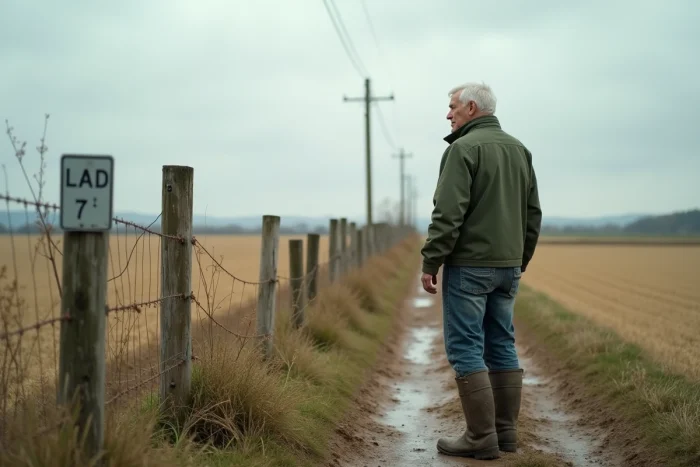
Damage Caused by Animals
Livestock operations add a layer of complexity. Damage caused by animals to neighboring crops or the lessor’s infrastructure engages the tenant’s liability. A specific “animal damage” guarantee must be included in the tenant’s contract, otherwise compensation relies entirely on their own funds.
Clauses of the Rural Lease and Insurance: Points to Check Before Signing
The departmental standard lease sets a framework, but the parties can add specific clauses related to insurance. Three checks are essential before signing:
- The tenant’s insurance obligation clause must specify the minimum required guarantees (civil liability for operations, multi-risk for crops, operational buildings).
- The distribution of premiums between lessor and tenant must be explicit. The common law of farming stipulates that recoverable charges are limited, but insurance costs for the buildings can be subject to contractual sharing.
- The resolutory clause in case of insurance default protects the lessor: if the tenant ceases to insure, the lease can be terminated after formal notice.
The lease engages two patrimonies over a long duration, often nine years renewable. Poorly calibrated or poorly distributed insurance coverage can turn a trivial claim into an expensive dispute. The drafting of the lease remains the moment when both parties have the greatest leverage to clarify these issues, well before a hailstorm or a fire outbreak raises them in their place.