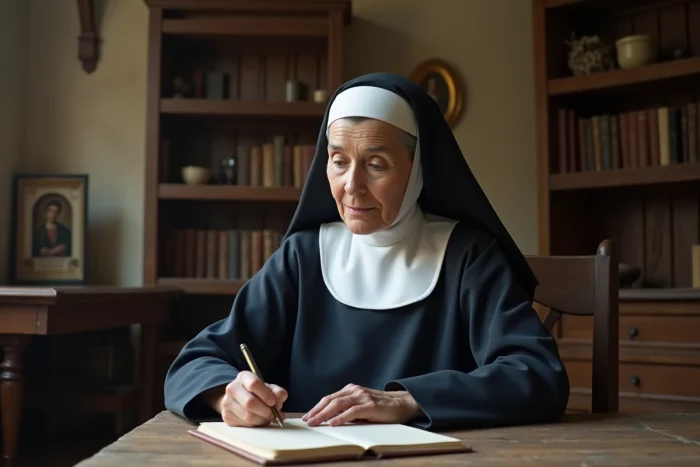
“Sister’s salary”: the expression may come as a surprise, as it clashes with a common idea, that of a timeless vocation, detached from material concerns. However, behind the veil, the reality is much more concrete. In France, members of religious communities do not have a professional status recognized by the Labor Code. Their financial resources mainly come from the congregation or their outside activities, often without individual remuneration. Some sisters, however, work in the social sector, notably as specialized educators, and then receive a salary that is redirected to their community.
This system raises questions about the recognition of work, social security, and the accumulation of statuses. The economic and regulatory realities of these paths contrast with the personal commitment and expectations placed on these roles in social support.
Becoming a Sister in France: Path, Commitment, and Vocation
Joining a religious community in France is not something that can be improvised. Becoming a sister requires a long journey, made up of steps and individual decisions. First, the candidate shares the life of a community during the postulancy, this trial period where one discovers the spirit of the congregation. Next comes the novitiate, an immersive experience that trains one in the rules of the religious order and the legacy of the founder or foundress: Jeanne Jugan for the Little Sisters of the Poor, Angèle Merici for the Ursulines, Saint Vincent de Paul for the Daughters of Charity, to name just a few. At the end of this training, the vows of poverty, chastity, and obedience are pronounced. For some, these commitments are lifelong, while for others, they are renewed annually according to the tradition of the order. Daily life is then organized around community rules, under the guidance of a superior or an abbess in a monastery. The missions are varied: nurse, teacher, psychologist, social worker. For those who engage in support work, a social work training is sometimes necessary and recognized by the State. The question of remuneration keeps coming up. How much does a sister earn in France? Behind the fantasy, the rule is simple: a salaried sister redirects her pay to the community. Housing, food, and social coverage are pooled. This model relies on sharing, solidarity, and transmission, similar to the Sisters of the Countryside or the Daughters of Wisdom, where mutual aid between generations structures communal life.
What are the realities for specialized educators and social work professions today?
The social sector is going through a tense period. Professionals in social work, specialized educators, social service assistants, counselors, and support workers face difficult working conditions: high emotional load, under-staffed teams, and increasing complexity of situations to manage. The lack of staff and the precariousness of contracts complicate recruitment and retention, while salaries stagnate and resources no longer keep pace with needs. The daily life of a social worker illustrates these challenges. Intervening with children in danger, families in crisis, people with disabilities or exclusion requires expertise gained at the school of social work and consolidated in the field. One must be able to handle urgency, navigate from one system to another, and resist the bureaucracy that complicates every intervention. This solidarity inherent to religious vocation resonates in social work. Supporting the most vulnerable, protecting childhood, fighting against precariousness: these are daily commitments, often invisible. These professions maintain social ties, driven by an ethic of discreet but decisive action.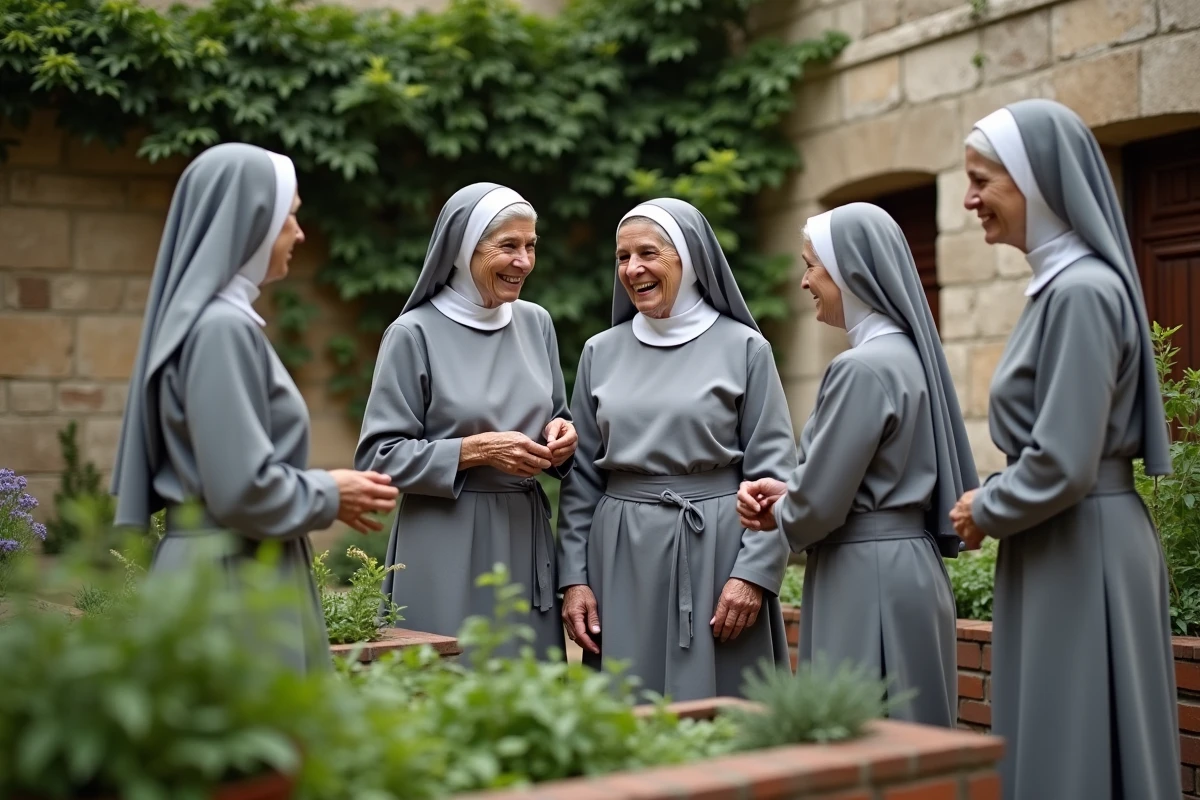
Living conditions, remuneration, and job prospects in the social sector
Within the social sector, the lives of sisters are organized around concrete solidarity and a logic of pooling resources. The community takes care of the essentials: housing, meals, daily expenses. Several sources of funding ensure this balance:
- the salaried work of members (nurses, teachers, social workers),
- monastic craftsmanship,
- the donations from the faithful and sometimes the management of an old real estate heritage by the economist.
For individual remuneration, the rule remains unchanged: any salary received is redirected to the community, which then redistributes “pocket money,” generally between 50 and 150 euros per month for each sister. Regarding social protection, affiliation with CAVIMAC guarantees health coverage and retirement, often between 600 and 900 euros per month. Sisters without salaried activity can access RSA (around 635 euros) or supplement with ASPA.
- Priority is given to sharing resources, far from any logic of accumulation.
- This model provides material protection but leaves little room for financial independence.
The congregation ensures collective cohesion and supports older sisters, often assisted by the younger ones. Job opportunities in the social sector exist but are always framed by communal life and service to others. Ultimately, religious life and social work converge on one ground: that of commitment without calculation, where the collective takes precedence over the individual. In every community, behind every mission, the silhouette of a sister in service emerges, far from the spotlight, and yet, without whom many social ties would silently unravel.