2048. This is not the score of a game, nor the date of a science fiction novel. It is the average number of pieces of information a student must assimilate in a school year in France. But how much do they really understand?
Memorization methods, once the queens of education, still hold sway in French schools and universities. Students recite, they remember, then forget sets in. Teachers perpetuate dictation and repetition, while fatigue takes root. Faced with this frozen landscape, learning often resembles an exhausting race: the further you go, the more the finish line seems to recede.
Why traditional methods are no longer sufficient for complex subjects
Learning mechanically does not weigh heavily against complexity. As layers of knowledge accumulate, linear memorization falters. Students are lost in the face of dense textbooks, an abstract devoid of context. Lectures and passive note-taking leave behind those who do not fit into the imposed format.
Today, the demand for suitable tools is rising from the classrooms. Specific disorders such as dyslexia, dyscalculia, and ADHD require the invention of new paths. Parents and teachers are seeking ways to give substance to the abstract, to connect, to explain, not just to accumulate points, but to truly relate and understand. Academic victories now hinge on genuinely appropriated knowledge.
Relearning how to learn becomes a collective adventure. It is no longer enough to listen; one must experiment, diagram, manipulate, in short, actively engage with knowledge. Many teachers want to reinvent their pedagogy, to make explicit what seemed reserved for a few, to open the door to all students. For them, discovering Je Comprends Enfin is choosing a way of support that places clarity at the forefront. This model repositions equal opportunities and personal growth at the heart of daily life.
Game-changing alternatives: mind maps, active pedagogies, and collaborative learning
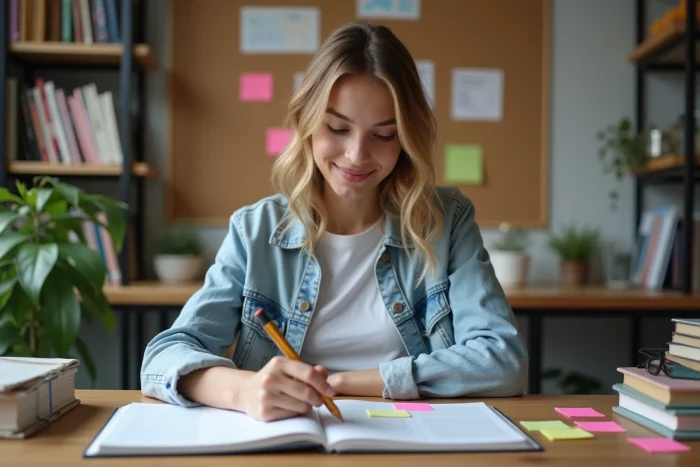
There are now concrete approaches to better tackle difficulty. Mind maps, by visually organizing ideas, become formidable allies for those who want to retain and make connections. Originating from mind mapping, they structure, help recall, and make access to complex knowledge natural.
On the side of positive pedagogies, personal exploration is prioritized: mental management, relaxation, fine adaptation to each individual’s profile. The child becomes an actor; play and curiosity allow them to progress with more meaning at each step. Montessori, Freinet, or Steiner pedagogies invite manipulation, experimentation, and the construction of learning that aligns with each child’s rhythm.
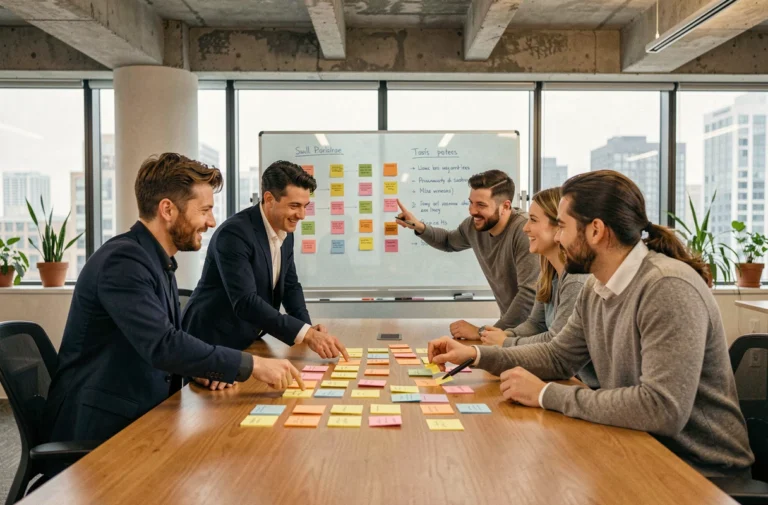
Working in groups also opens a new horizon. Collaborative learning fosters autonomy and critical thinking. Other countries like Denmark, Canada, or Singapore have adopted it: the classroom transforms into a vibrant community, where exchange prevails over competition. Here, play plays a real role, serving as a motivator and memory aid, giving real flavor to daily learning.
Digital tools, games, and educational videos: learning differently finally becomes accessible to all
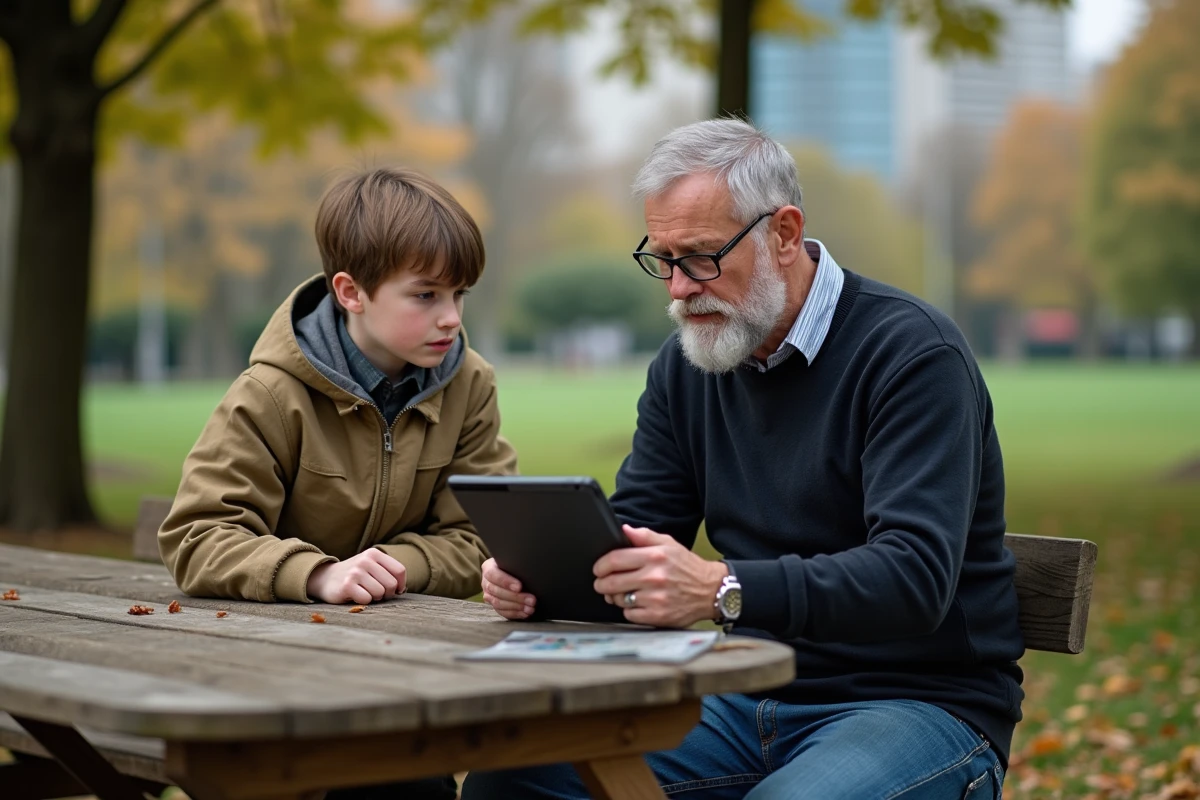
Digital technology has risen to the forefront of alternative learning methods. Gone are the passive resources: today, platforms multiply interactive videos, educational games, and materials that make even the slightest concept approachable and even appealing. A child can manipulate, test, and verify in real-time. A multiplication table is learned through a song; abstract concepts are revealed with the help of interactive cards.
Teachers, just like parents, now have tools that track progress, adapt to the child’s pace, and personalize the journey. Educational games are no longer a gimmick; they become a privileged bridge to a lasting mastery of knowledge. Formats, from textbooks to animated videos, multiply the paths to understanding.
To better identify these resources, here are some concrete examples of tools that make learning more accessible:
- Logic games: to work on reasoning and support autonomy
- Short videos: to illustrate concepts directly
- Digital mind maps: to synthesize and organize knowledge for reuse
In a country long attached to the model of the lecture, these tools offer a clear response to the needs of all, including students with disorders. Intelligently integrated into pedagogy, digital technology opens the school to a form of learning that is more inclusive, tailored to each student’s life.
Knowledge is no longer this elusive prey that must be caught on the fly. It is created, tamed, and circulates. The classroom is gradually reinventing itself. And perhaps tomorrow, understanding will be the rule, not the exception.