In Quimper, tourist attendance has increased by 12% in a year, according to data from the local tourism office. However, some addresses and activities remain largely unknown, escaping the majority of usual itineraries.
The 2024 cultural calendar displays an unprecedented density of events, while several recently opened establishments are already fully booked weeks in advance. The city thus showcases a vitality and diversity that are uncommon in a city of this size.
Quimper, between Breton history and art of living
Quimper does not do things by halves. Its Breton heritage asserts itself at every corner, between an embraced past and contemporary energy. The city, rooted in the heart of Finistère, is traversed by the Odet and the Steïr, two rivers that shape a setting where tradition and modernity respond to each other. The historic center, watched over by the Gothic spire of Saint-Corentin Cathedral, invites visitors to read the city as a living narrative, chapter by chapter. The cobblestones of old Quimper guide visitors to lively squares, such as Saint-Corentin or Place au Beurre, playgrounds for creperies that do not compromise on authenticity.
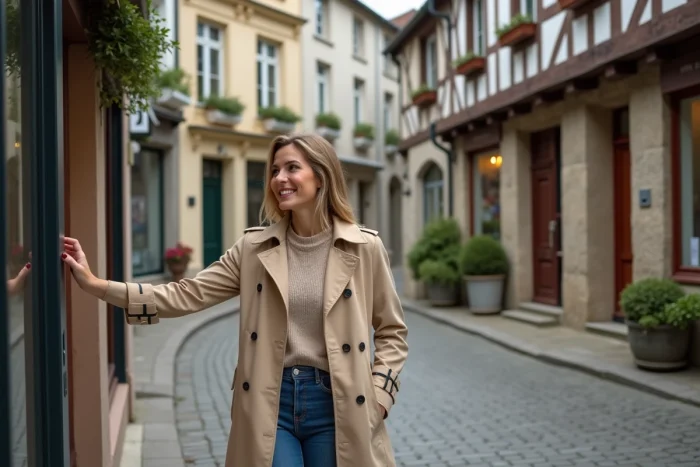
Wandering among the half-timbered houses, Quimper reveals its nuances. The Bishops’ Palace, adjacent to the cathedral, houses the Breton departmental museum, a must-visit for those wanting to grasp the essence of costumes, regional furniture, and pottery. Just a stone’s throw away, the Fine Arts Museum exhibits works by Paul Gauguin and Max Jacob, proof that the city never rests on its artistic laurels. In Locmaria, the historic cradle of pottery, craftsmanship endures with the HB-Henriot pottery.
Cultural life is in full swing with the Festival de Cornouaille, which vibrates through Quimper every summer around Breton culture. Gaining height on Mont Frugy allows one to embrace the city and the Odet in a single glance, capturing the unique balance between nature and urbanity. The gardens of Retraite and Paix offer true bubbles of calm, far from the hustle and bustle. To stay updated on new initiatives and emerging talents, the magazine So Quimper keeps a watchful eye and shares its discoveries throughout the year.
Which sites and neighborhoods reveal the unique charm of the city?
Saint-Corentin Cathedral, a Gothic silhouette rising above the square of the same name, is one of those places that strikes immediately. The 15th-century stained glass casts luminous reflections on the stone, while nearby, the Bishops’ Palace houses the Breton departmental museum, a true memory of local culture, including costumes, pottery, and furniture. Just across the street, Kéréon Street displays its half-timbered facades, testament to a carefully preserved urban history.
The Fine Arts Museum, located just a step away, showcases a beautiful diversity of European paintings and works related to Gauguin or Max Jacob. Locmaria, an emblematic neighborhood, highlights Quimper’s pottery through its workshops and verdant corners along the Odet. The priory and the church of Notre-Dame de Locmaria recall the monastic roots of the area, while the HB-Henriot pottery continues a craft that dates back to the late 17th century.
Here are some addresses that punctuate life in Quimper:
- the Halles Saint-François, a covered market where local flavors and colors meet;
- Place au Beurre, a must for tasting a truly authentic crepe;
- the Jardin de la Retraite and the Jardin de la Paix, true green lungs in the heart of the city.
Walking along the ramparts at the Pont Médard is taking the time to watch the Odet flow. A little further away, the Lanniron estate reveals an elegant park and its orangery, perfect for a stroll away from the hustle. In Quimper, each neighborhood has its character, its history, and its share of details to discover, between visible heritage and vibrant daily life.

Gourmet addresses, walks, and activities to fully enjoy Quimper this year
In the city center, creperies do not pretend: the batter is golden, thin, and Breton cider is served in pottery bowls that remind one of the city’s attachment to its traditions. A must-try is the kouign-amann, a caramelized puff pastry cake that is the pride of local artisans. Each table is dressed with a Breton bowl, a nod to Quimper’s pottery history.
The Halles Saint-François market brings together a community of producers, farmers, and fishmongers. Here, the stalls of seafood, farm cheeses, and local vegetables tell the story of the region in their own way. There’s nothing like lingering in the alleys of the old town, admiring the half-timbered houses on Kéréon Street, then stopping at Place au Beurre for a meaningful gourmet break.
To breathe, head to the gardens of Retraite or Paix, havens of greenery in the heart of the center. Locmaria, as always, invites you to discover Pascal Jaouen’s workshop or the church of Notre-Dame de Locmaria. When summer arrives, the Festival de Cornouaille transforms the city: squares and quays come alive, Breton culture is expressed through dances, music, and encounters.
For those who want to extend the adventure, the region is full of destinations to explore:
- Concarneau and its Ville Close,
- Locronan, a medieval jewel,
- the Pointe du Raz,
- Douarnenez and its port-museum,
- the wild beaches of southern Finistère.
The energy of Quimper is not limited to its walls: it spreads, invites you to go out, to return, to be amazed. This year, the city awaits only one thing: to reveal its secrets to those who take the time to see it differently.