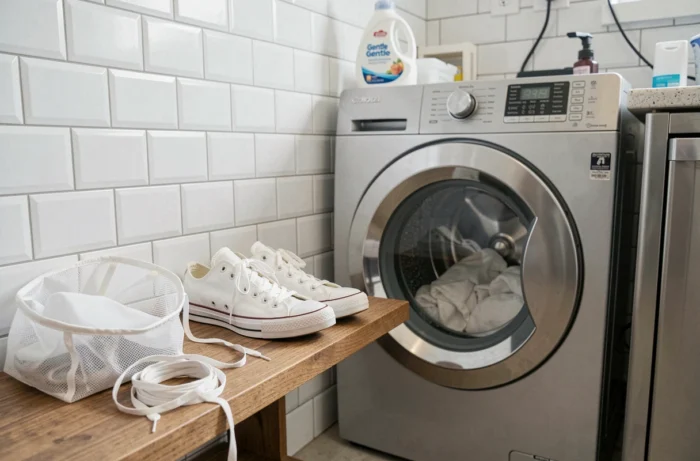
Canvas Converse shoes often end up at the back of the closet, grey with dust or stained after a festival. The first instinct is to put them in the washing machine. The problem is that Converse officially advises against machine-washing its canvas or leather shoes. The brand recommends cleaning them by hand. If you decide to try a wash cycle anyway, a few precautions can help limit the damage, but none can guarantee a risk-free result.
What really happens to your Converse canvas in the drum
Two pairs of canvas Converse shoes can look alike yet react very differently to washing. The reason lies in the parts you can’t see: internal reinforcements, the type of glue between the sole and upper, the lining, and the metal eyelets.
In the drum, the shoes are subjected to two damaging forces at once. Prolonged exposure to water softens the glue and loosens the canvas. The rotating motion knocks the soles against the metal, which can warp the structure or loosen bonded parts.
Have you ever noticed a pair come out clean but slightly twisted, with the edge of the sole starting to gape? That’s exactly how it happens. The surface has been cleaned, but prolonged moisture has weakened the internal construction.
So before you consider machine-washing your Converse, inspect the pair carefully rather than just checking the color or visible fabric.
Inspect before washing: damage that rules out machine-washing
This is the most useful check—and the one most often overlooked. Any existing damage to the shoes will almost always get worse during a wash cycle. Here are the warning signs:
- The sole is coming away, even by a few millimeters, at the heel or toe. Water will seep in and widen the gap.
- A seam is loose or starting to come undone, especially around the side reinforcements or eyelets. The drum’s agitation will pull at this weak spot.
- The canvas is thinning, torn, or visibly worn. Wet fabric loses strength, and a small tear can grow.
If you can see any of these signs, don’t machine-wash the shoes. Spot-cleaning by hand with a damp cloth and mild soap is the only sensible option. And if the pair is truly nearing the end of its life, repairing it (regluing or stitching) before cleaning can prevent a fixable problem from becoming permanent damage.
Washing machine settings to reduce the risk to your sneakers
Let’s assume your Converse are in good condition, with no visible damage. If you choose to machine-wash them despite the manufacturer’s recommendation, every setting matters.
Temperature and cycle
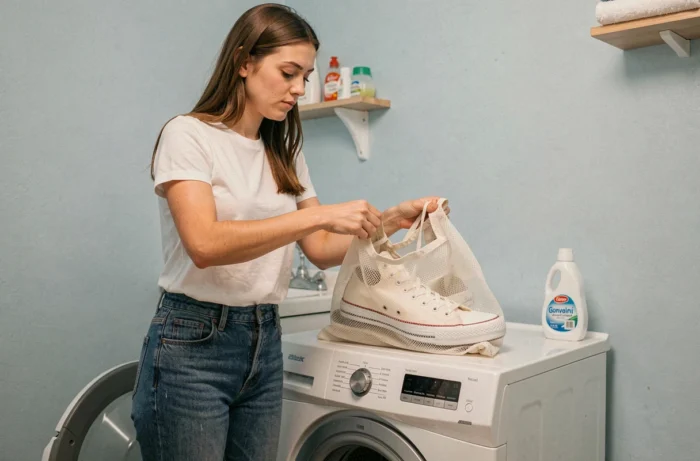
Cold water and a delicate cycle—no exceptions. Hot water speeds up the softening of the glue and can shrink the canvas. A short cycle with a low spin reduces soaking time and the force of the rotation.
Preparing the shoes
Remove the laces and insoles. Laces can get tangled around parts of the drum, and insoles can warp under mechanical stress. Wash them separately by hand with a little soap.
Put the shoes in a laundry bag or, if you don’t have one, in a tied pillowcase. This won’t protect them from water or agitation, but it will reduce direct rubbing against the stainless steel drum. A laundry bag reduces impacts, not the risks of soaking.
Detergent
Use a small amount of mild liquid detergent without bleach. Bleach and harsh stain removers can alter the color of the canvas, even on white Converse (causing yellowing). Don’t use fabric softener either: it leaves a film that can make the canvas stiff once dry.
Drying Converse: when most of the damage happens
The shoes come out of the machine clean. This is when many people make the costliest mistake. A tumble dryer, radiator, or hair dryer—any direct heat source can warp the rubber sole, loosen the reinforcements, and shrink the canvas irreversibly.
Air-dry at room temperature, away from all heat sources. Stuff the shoes with newspaper or paper towels to help them keep their shape and absorb moisture faster. Replace the paper every few hours.
Lay the sneakers flat or hang them by the tongue in a well-ventilated spot. Depending on the season, they may take one to two days to dry completely. Patience at this stage determines the final result.
Regular care for canvas Converse: avoid needing a full wash
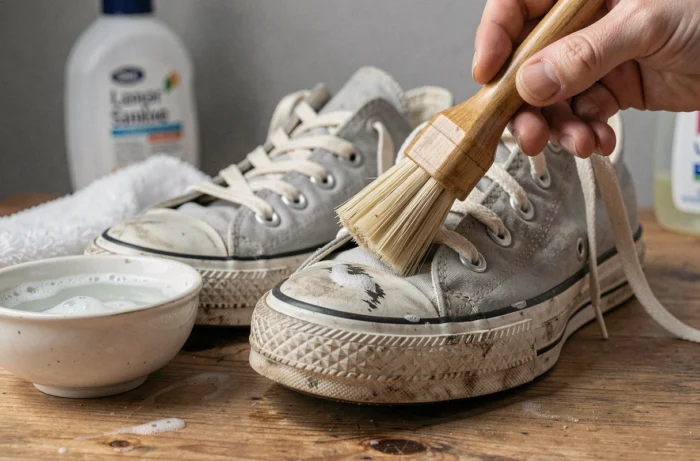
The best way to avoid risking a machine cycle is to deal with dirt early. A stain treated the same day will almost always come out with a damp cloth and mild soap (such as Marseille soap).
For tougher stains on white canvas, a paste made from baking soda and water, applied with a soft-bristled brush, works well without soaking the shoe. Scrub gently, wipe with a damp cloth, and leave to air-dry.
Spot-cleaning every two to three weeks extends the life of your pair far more than an occasional full wash. Clean the rubber toe cap and outsole with a magic eraser or a little white toothpaste applied with an old toothbrush.
Machine-washing should be a last resort, not part of your regular care routine. The brand advises against it, prolonged exposure to water weakens the construction, and the drum puts the shoes under stress. If you do decide to machine-wash them, inspecting the pair beforehand and air-drying them are the two steps that make the difference between saving your shoes and ending up with a warped pair.